
Attention Parishioners!
 St. Joseph Catholic Church will NOT be holding Religious Education OR High School Confirmation this Sunday, November 1, 2026, due to 65th Annual Spaghetti Dinner being held in the Fr. Charles J. Murray Parish Hall.
Saturday: 4:30 p.m.
Sunday: 7:30 a.m.; 9 a.m.; 11 a.m.
Mass Livestreamed:
4:30 p.m. (Saturday); 11:00 a.m. (Sunday)
Daily Masses: 8 a.m.
Monday-Thursday:
8 a.m. - 3 p.m.
Friday:
8 a.m. - 12 p.m. (Noon)
Phone: (719) 544-1886
Saturday:
3:30 p.m. - 4 p.m.
Follow us on Socia Media


St. Joseph Catholic Church will NOT be holding Religious Education OR High School Confirmation this Sunday, November 1, 2026, due to 65th Annual Spaghetti Dinner being held in the Fr. Charles J. Murray Parish Hall.
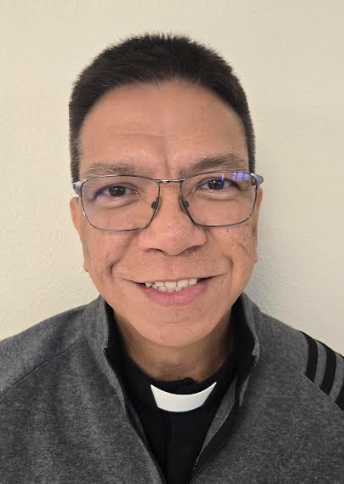 My dear brothers and sisters,
Here is a revised version that avoids “our,” keeps your pastoral tone, and stays clear, encouraging, and practical.
Participating in the Elections This November (~.45 page — pastoral, encouraging, practical)
My dear friends in Christ, this coming November, the United States will once again enter an important moment: the national elections. Even though I am not an American citizen, I see how meaningful this
moment is for many of you. Voting is not only a civic responsibility — it is a way of shaping the future of your families, your community, and the values you hope will guide this nation.
Some people feel their vote is small. But in the eyes of God, small things matter. A single candle brightens a dark room. A single act of kindness changes a heart. And a single vote, offered with prayer and conscience, becomes part of a larger movement toward the common good.
So I encourage you: participate with faith and clarity. Pray before you vote. Ask the Holy Spirit to guide your mind and calm your heart. Review the issues carefully. Seek reliable information. Make sure your registration is updated. Plan your voting day now — whether by mail, early voting, or in person. If someone you know needs help getting to the polls, accompany them.
And above all, vote with hope. Elections can bring tension, strong emotions, and division. But as Christians, you can enter this moment with peace, knowing that God remains present above every headline and every debate. Your role is simple: act with conscience, choose with prayer, and trust that God walks with this nation through every season.
Participating in the elections is one small way you can be a light — steady, faithful, and hopeful — for the future of this country.
Fr. Joseph
Mark Those Calendars!
Oct. 27:
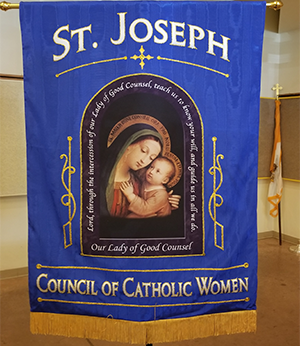
The Council of Catholic Women's meeting that was originally scheduled for Wednesday, October 28, has been moved to Tuesday, Oct. 27, starting at 5:30 p.m. (Fellowship, then business meeting to follow).
 St. Joseph Catholic Church will begin the Order of Christian Initiation of Adults (O.C.I.A.) on Wednesday, October 28th at 6:30pm in the Maria Lopes Classroom.
This is a two (2) year program, and it is for both Adults and Children.
Registration forms are available in the office. There is a $50.00 charge at the time of registration.
If you have any questions , please reach out to Deacon Ed or Josie in the office during business hours
at 719-544-1886.
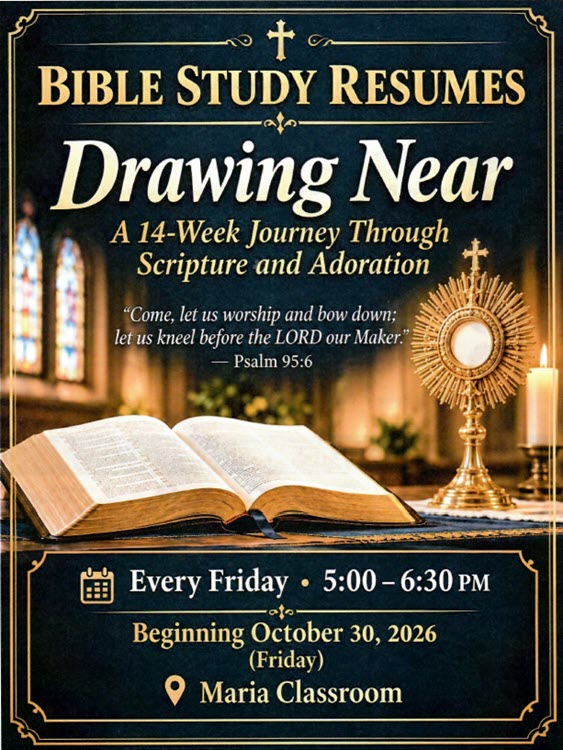
Join Father Joseph beginning October 30. Click the picture for more details.
 Attention Parishioners!
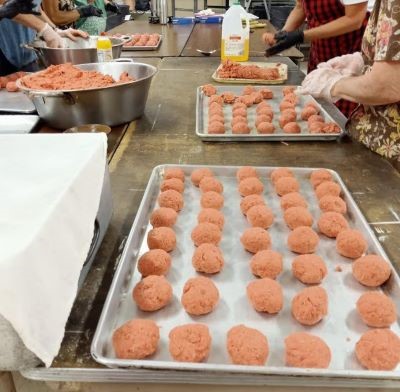
We will be making meatballs for our upcoming spaghetti dinner on Halloween morning (Sat., Oct. 31) beginning at 8 a.m.
The Spaghetti dinner will be held the following day, Sunday, Nov. 1.
We are looking for a lot of help, and we hope to see you in the Fr. Charles J. Murray Parish Hall.
Don't forget! Coming this Sunday, Nov. 1! Get your family together, call your friends, and come on out to St. Joseph's Fr. Charles J. Murray Parish Hall for the best spaghetti in town!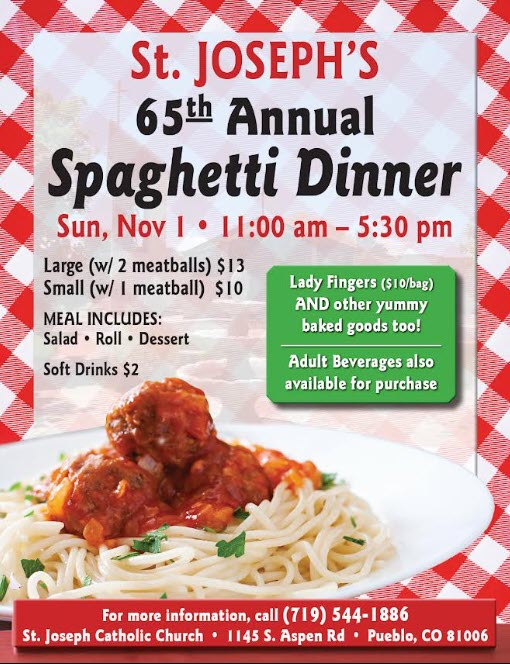
St. Joseph Catholic Church livestreamed the 11 a.m. Mass on Sunday, October 25, 2026 (The 30th Sunday in Ordinary Time).
Celebrant: Fr. Joseph Matitu, SSS
Assistant: Deacon Ed Riccillo
Spirit Choir Mass Music
30th Sunday in Ordinary Time
Oct. 25, 2026
(Sun: 11 a.m)
Entrance:
Gathering: Amazing Grace - My Chains Are Gone (SJPSB pg. 7)
Preparation of Gifts:
You Are My All In All (SJPSB pg. 141)
Communion:
Lord, I Need You (SJPSB pg. 69)
Sending Forth:
My Life Is In You (SJPSB pg. 76)
SJPSB=St. Joseph Parish Songbook
St. Joseph Catholic Church livestreamed the Rosary and Funeral Mass for Gilbert E. Salazar beginning at 9:30 a.m. on Tuesday, October 20, 2026.
Rosary Celebrant: Marcos LeBlanc
Celebrant: Fr. Joseph Matitu, SSS
Assistant: Deacon Ed Riccillo
Click HERE to view Gilbert's Obituary (Courtesy of Roselawn Funeral Home, Cemetery & Crematory)
 Some of the training information for Extraordinary Ministers (EM) has been updated. For those who were unable to attend the recent session, I am attaching a copy of the handout that was provided.
Father Steve requests that Sacristans arrive 30 minutes before their scheduled Mass and that all EMs serving arrive 10–15 minutes early. This allows the Sacristans to confirm that all positions are covered. Please remember to check in as soon as you arrive.
There are a few additional updates that were not included in the handout regarding the sign‑in sheet:
• The Cup minister will now stand next to the Plate minister at the altar and follow them to their assigned station to distribute the Body and Blood of Christ.
• If you are assigned to the station near the music ministry, please place your plate and cup on the right side of the altar. Then remain by the stair banister until the other EMs have finished. Afterward, all ministers will gather in front of the altar as usual to bow together before returning to their seats.
Please contact Fr. Steve, Deacon Ed, or Diana Alvaravo if you have any questions. Please read the attached document in "Read More."

St. Joseph Knights of Columbus, Council 9456 members are looking for interested men of the Parish to become a member of the Knights.
If interested in becoming a Knight, contact John Spearing or any brother Knight you see in church and we will provide you with information and answer any questions you might have.
What to Know:
P.S. Please do NOT use the PayPal online tithing for the church to send in your gift. Thank You!
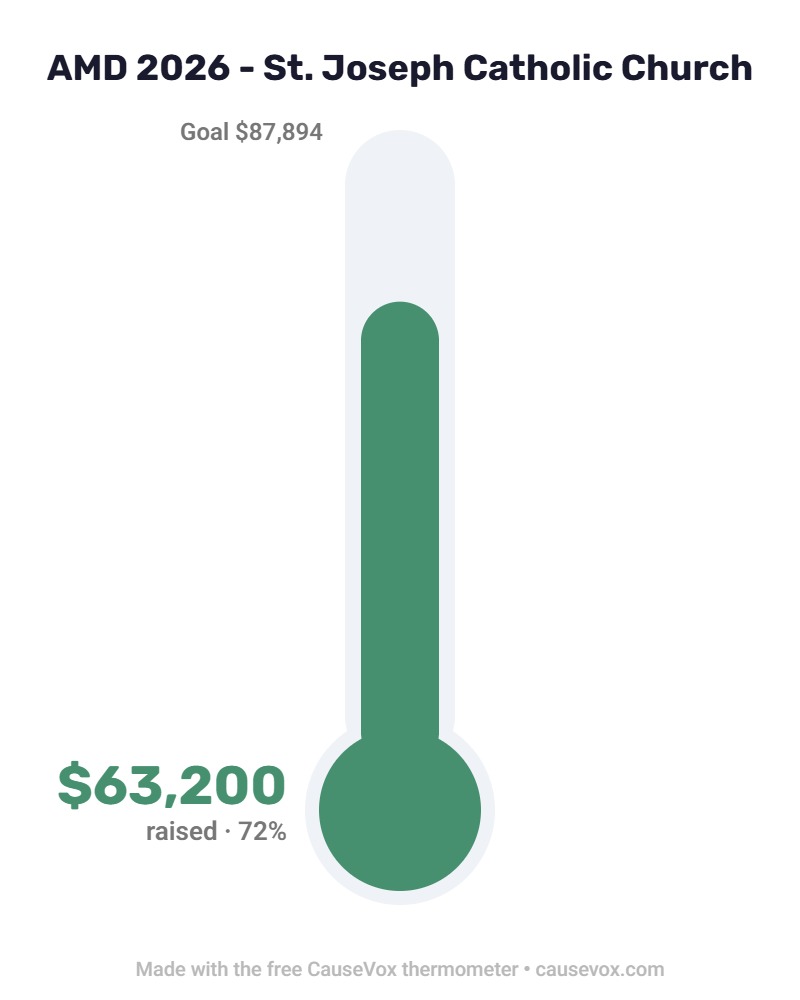
We would like to thank those households who have already pledged and/or given already. We have put your names on the wall by the thermometer to thank and acknowledge your pledge. If we have missed your name or you do not want your name on the wall after your pledge, please let the office know. Thank you once again for your pledge and/or donation.
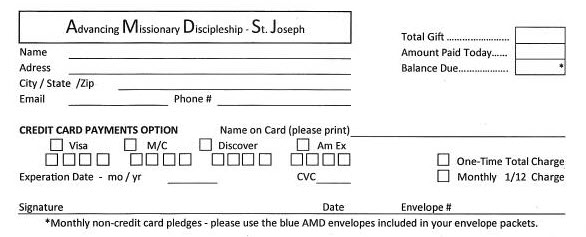 Click the AMF card to download, fill out and bring to the parish office or leave in collections at mass.
Attention Parishioners!
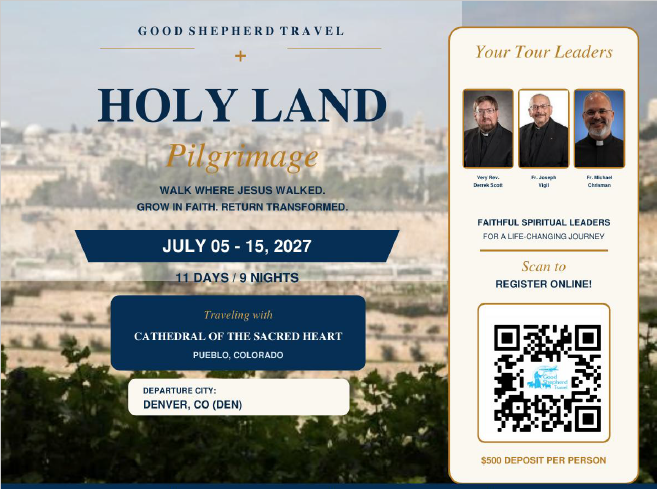
Take a once-in-a-lifetime trip with Spiritual Leaders from Pueblo: Fr. Derrick Scott, VG, Fr. Joseph Vigil, and Fr. Michael Chrisman! This will be an amazing experience for all who have a chance to go! Click the picture below for more details.
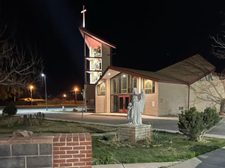
Want to become a member of our Parish? Click HERE to download our registration form. Fill out the form, print it, and bring it to our office during office hours or any Mass on the weekends. Call if you have any questions.
Click the header below to learn about Fr. Joseph's First 100 days at our Parish.
Job Opportunities at the Diocese of Pueblo. Click below to learn more.
Click below to search Mass times and Catholic churches near you.

St. Joseph Catholic Church has created an online tithing area as a means for those parishioners who can't attend Sunday services or would to make a contribution to our parish. Your generosity is greatly appreciated. Thank You!
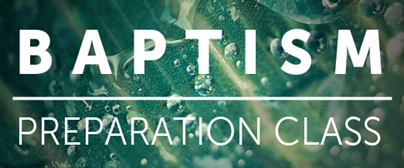
Friday, October 30, 2026
(Maria Lopez Classroom)
6 p.m. to 7:30 p.m.
Contact the Parish Office for details
(719) 544-1886
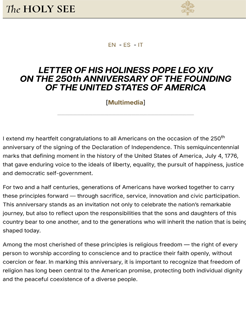
Below is a letter from the Holy See, Pope Leo XVI, regarding the 250th Birthday of the USA. Click the picture below to view the entire message.
Click the pictures below to learn more about Pope Leo XVI. His "Coat of Arms" information courtesy of HugotSeminarista.



Our goal is to have a wreath for every one of the 4,000 veterans laid to rest on our sacred grounds by 2026. The plan is to send a monthly email to folks as a reminder of the remarkable history of our Grounds' veterans. In addition, we hope to sponsor 71 fresh balsam wreaths to create a memorial display, a giant wreath, east of the Rose Garden. All sponsors will be acknowledged in the WAA 2026 program. Read up on each monthly history spotlight.
January: Civil War
February: Spanish-American War
March: WWI
April: World War II
May: Korean War
June: Vietnam
July: America's 250th Birthday
August: Desert Storm/Persian Gulf
September: Iraq/Afghanistan
October: Wreaths Across America Story
Click the picture below to listen to a presentation by Lucille Corsentino, Foundation Board Member for The Roselawn 1891 Company, delivered at St. Joseph Catholic Church on May 3, 2026, regarding the Eighth Annual Wreaths Across America.
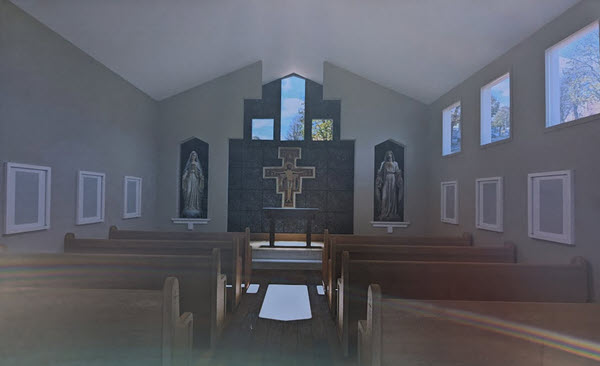
CAPUCHIN POOR CLARE SISTERS
Donations to: CATHOLIC FOUNDATION,
Poor Clare Fund on the memo line.
Checks to be mailed to:
Catholic Foundation
101 N. Greenwood St.
Pueblo, Colorado 81003-3164
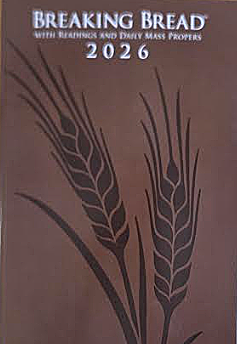
The 2026 Breaking Bread Book is available. If you would like to have one for yourself, you can purchase one before or after mass in the Sacristy or during the week at the Parish Office for $5.00.
Every Wednesday
(In the Church)
11 a.m. to 1 p.m.
Please read this pamphlet, and help contribute to our diocese today!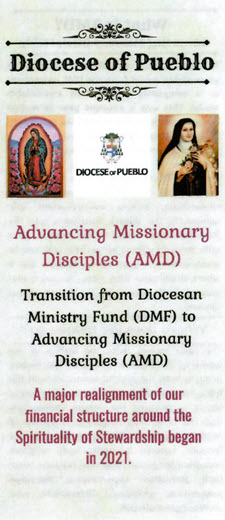
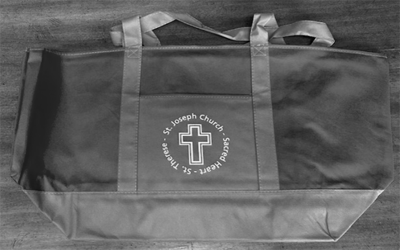
St. Joseph Bags for SALE
$5.00 each
Contact Parish Office and get yours today!
(719) 544-1886
Click a link below to the corresponding month to view rosary/funeral services for members of our parish at St. Joseph's Catholic Church.
October, 2026
August, 2026
June, 2026
May, 2026
April, 2026
March, 2026
January, 2026

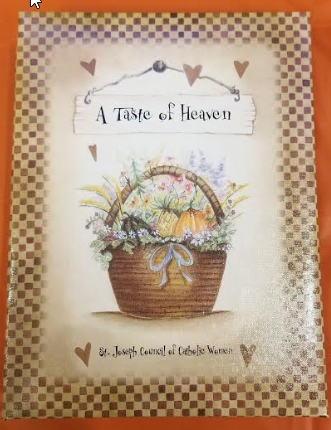
You can still get them during Parish Office hours.
They are selling for $25.
Please contact Diana Alvarado at 719-251-9146.
 St. Vincent de Paul food pantry
Next date open in 2026:
November 12, from 1-2 p.m.
Next food drop-off: October 24-25, after all Masses.
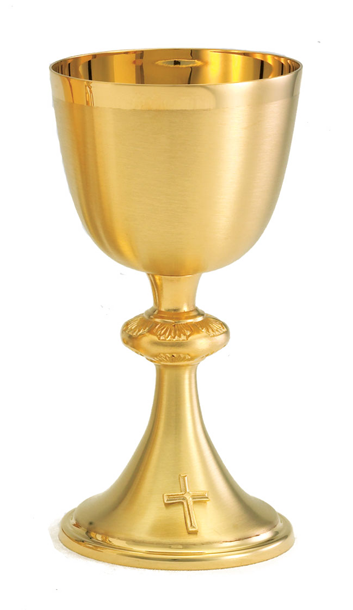 The Chalice for Vocations ministry was developed to promote fervent and devotional prayer for an increase in vocations to the priesthood and religious life. These specific intentions are raised as the chalice travels within the parish community.
A prayer guide is provided and geared for readers that are young or old. Spontaneous and personal prayers for vocations are always acceptable and welcome also. Please incorporate prayers for an increase in vocations within your prayer life.
If you would like to receive the Chalice for Vocations for a week, please contact the parish office at 719-544-1886. Thank you. Be confident that your prayers are heard.
CHALICE FOR VOCATIONS PRAYER GUIDE (DOWNLOAD - IN PDF)
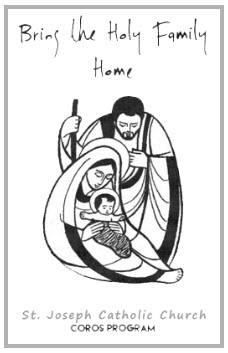
The Knights of Columbus (KOC) of St. Joseph (#9456) have introduced a new program called "The Holy Family"
We are inviting parishioners of any household to consecrate themselves to the Holy Family. Each week the parishioner will take the sanctuary of the Holy Family into their homes for one week of daily prayer. At the end of your week, you will bring back the sanctuary to the church for the next family.
Attention parishioners, those who currently have taken home the Holy Family (Coros Program), please be sure to bring it back to the sacristy on the Saturday/Sunday after you received it so we can present it to another family at the next mass. Thank You!
Get yours today!

We have 262 guests and no members online
St. Joseph Council of Catholic Women has shirts and scarves available for its members.
Contact Rose Guerrero (719) 240-6111
Shirt prices: (S/M/L/XL $7.00)
(2XL $9.00) (3XL $11.00)
Blue Scarves: ($5.00)
If you are planning a Quinceañera, the requirements are:
Don't hesitate to contact the Parish Office to register at 719-544-1886.
If You See Something, Say Something
Sept. 28, 2025 by Bishop Stephen J. Berg
Pisciotta Earns Honorary Life Membership
Jan. 12, 2024 by John Barker, Jr.
Come, Lord Jesus
Dec. 22, 2024 by Bishop Stephen J. Berg
Two Enter PCHS Hall of Fame
by James Batrolo