 DEAR FRIENDS OF ROSELAWN
The history spotlight for June is the Vietnam War.
2026 is the 250th birthday of the United States, marking the Semi-quincentennial Anniversary of the signing of the Declaration of Independence on July 4, 1776.
These history spotlights have been presented monthly beginning in January 2026.
As each conflict is presented, we gain an appreciation for the sacrifices made in the name of freedom from the Civil War to the present day in Iraq and Afghanistan.
Let's make Saturday, December 19, 2026, Roselawn's 8th annual Wreaths Across America the day that each of Roselawn's 4,000 veterans is honored by placing a fresh green balsam wreath adorned with a red bow on their final resting places.
VIETNAM WAR
November 01, 1955 – April 30, 1975
The Vietnam War was an armed conflict in Vietnam, Laos, and Cambodia fought between North Vietnam and South Vietnam and their allies. The Soviet Union and China supported North Vietnam, while the United States and other anti-communist nations supported South Vietnam.
Vietnam was the “Helicopter War” - helicopters were the defining technology of the Vietnam War. Nearly 12,000 helicopters were deployed over the course of the conflict, providing air mobility to move troops rapidly across the mountainous, jungle-covered landscape. Their key roles and functions were troop transport, medical evacuations, search and rescue, logistics and resupply and air support and gunships. The “choppers” were often referred to as the “eyes and ears” of the battlefield.
The jungle in Vietnam dictated the war’s character, transforming it into a great danger, close-quarters and disorienting infantry fight, and negating American technological superiority. The dense forest canopy cast a dim light, and soldiers could not see enemies just a few feet away. The Viet Cong’s knowledge of the terrain, tunnels, and hit-and-run tactics gave them the advantage in setting up ambushes, choosing when to fight, and then quickly disappearing back into the foliage.
Many Americans opposed the Vietnam War due to the high number of casualties, the introduction of the draft, and the televised brutality of the conflict. The war’s high economic cost and the belief that it was an immoral, unwinnable civil war drove mass protests.
The Vietnam War was a primary catalyst for the 1960’s hippie counterculture, which emerged in protest against the conflict. Young people rejected materialist suburban life for communal living, sexual freedom, psychedelic drugs, and anti-war activism. They burned draft cards and went to Canada to show contempt for the war. By the mid-1970’s, the hippie movement waned, but it left a lasting impact on Western culture, including relaxed sexual attitudes, increased environmental awareness, and a decline in social formality.
A lasting impact of the war was Agent Orange, a powerful herbicide used by U.S. military forces to eliminate forest cover and crops for North Vietnamese and Viet Cong troops. From 1961 to 1971, more than 20 million gallons of various herbicides were sprayed over Vietnam, Cambodia, and Laos. Agent Orange, which contained the deadly chemical dioxin, was the most commonly used herbicide. It was later proven to cause serious health issues, including cancer, congenital disabilities, rashes, and severe psychological and neurological problems, among Vietnamese people as well as among returning U.S. service members and their families.
Key Casualty Statistics:
Total Deaths: Approximately 58,200 to 58,300 (records vary slightly)
Combat Deaths: Roughly 47,434 were hostile deaths
Non-Hostile Deaths: Nearly 11,000 perished from other causes (accidents, illness, etc.)
Wounded in Action: More than 300,000 U.S. soldiers were wounded.
Missing in Action: As of 2021, over 1,500 personnel were still listed as missing.
The U.S. lost the Vietnam War due to a combination of effective guerrilla tactics by North Vietnamese forces, waning American public support, and the inability to establish a stable popular government in South Vietnam. Despite military superiority, the U.S. failed to adapt to a political, unconventional war, leading to a costly stalemate and eventual withdrawal.
.
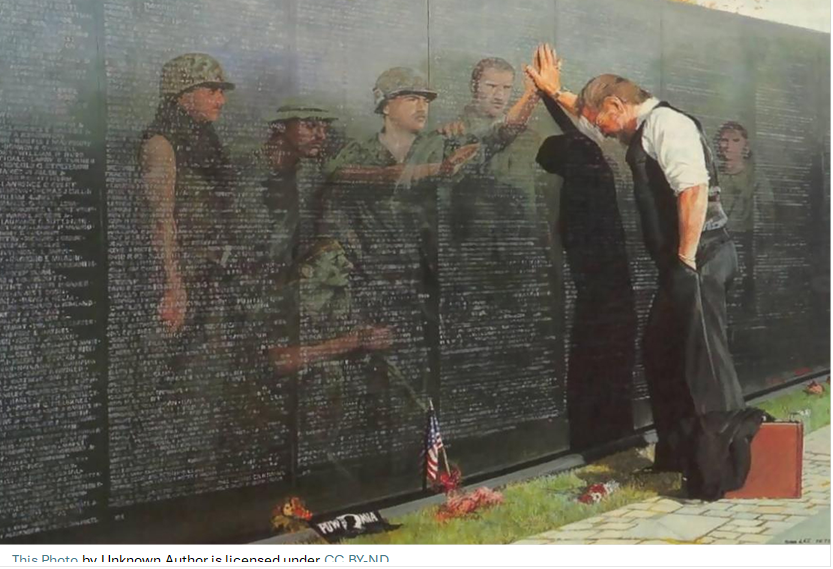
VIETNAM WALL IN WASHINGTON D.C.
The Vietnam Wall in Washington, D.C., was conceived by Jan Scruggs, an Army veteran who had served in Vietnam. He wanted to heal the nation's psyche after the divisive war. He started the Veterans Memorial Fund with $2,800 of his own savings. Ultimately, over 275,000 individuals and organizations raised $8.4 million to build the memorial designed by 21-year-old Maya Lin, a Yale University architecture student whose polished granite "V" lists over 58,000 names in chronological order of loss.
The fund held a nationwide design competition that received over 1,400 submissions. The winning design was an anonymous entry from Maya Lin. She envisioned a monument that looked like a "giant knife cutting a huge gash in America," acting as a symbolic scar and a quiet place of reflection.
LARRY TUCKER WAS ONE OF MANY OF OUR PUEBLO SONS WHO SERVED IN VIETNAM
AND THE FOLLOWING ARE HIS PHOTOS AND MEMORIES SHARED BY HIS WIFE, VIRGIALEE.
Growing up, Larry never considered any career other than serving in the military. He was commissioned in the U.S. Air Force in Aug., 1964. He served in Vietnam from December 1966 to August 1967 as an Electronic Warfare Officer in an RB-66 Aircraft. He flew 100 missions over North Vietnam. Each member of his crew was awarded the Distinguished Flying Cross for participation in a mission to rescue a downed pilot behind enemy lines. In 2014, he was laid to rest in Roselawn Cemetery.
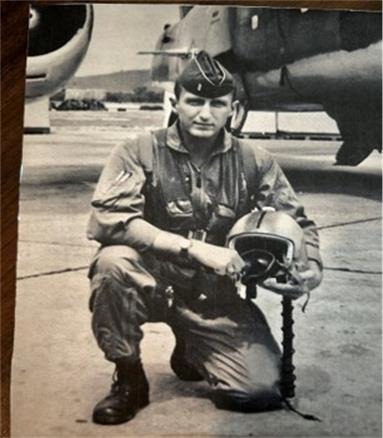
LARRY TUCKER 1941 - 2014
ROSELAWN CEMETERY HOSTED THE TRAVELING VIETNAM WALL FOR 4 DAYS IN JULY, 2016.
THE TRAVELING VIETNAM WALL IS A REPLICA OF THE VIETNAM MEMORIAL IN WASHINGTON, D.C.
The conclusion of the 4 days was a candlelight vigil honoring our 64 Pueblo Sons who made the ultimate sacrifice.
The highlight of the ceremony was presenting each of these Gold Star Families with a copy of the DVD honoring their sons with their photos and bios set to patriotic music.
The DVD is a meaningful and lasting tribute to each of these brave young men, and it will touch your heart.
The DVD below was made possible by the joint efforts of Marlin Liles and Tom McKenna.
CONCLUSION:
As we conclude each month's spotlight on history, we have a better understanding of Wreaths Across America's motto:
REMEMBER the FALLEN * HONOR those who SERVED * TEACH our children the value of FREEDOM
The attached sponsorship form is provided.
2026 is the first year that Roselawn has offered the Family Tree Page as a sponsorship option. Your family name will be part of the Family Tree in the Wreaths Across America 2026 program.
Sponsor 5 wreaths @ $17 each = $85
Names of veterans sponsored will be acknowledged on a separate page, as those who served
Sponsors' names will be acknowledged on a separate page
Our goal for 2026 is to place a wreath at the final resting place of each of the 4,000 veterans on Roselawn's sacred grounds.
Your support is appreciated as we join hands to commemorate our veterans on Saturday, December 19, 2026, at 12:00 noon for Roselawn's 8th Annual Wreaths Across America Ceremony.
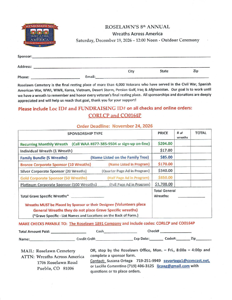 Click for a larger view and to download
Thank you - I'm a phone call away if you have questions,
Lucille Corsentino
719-406-3125 cell